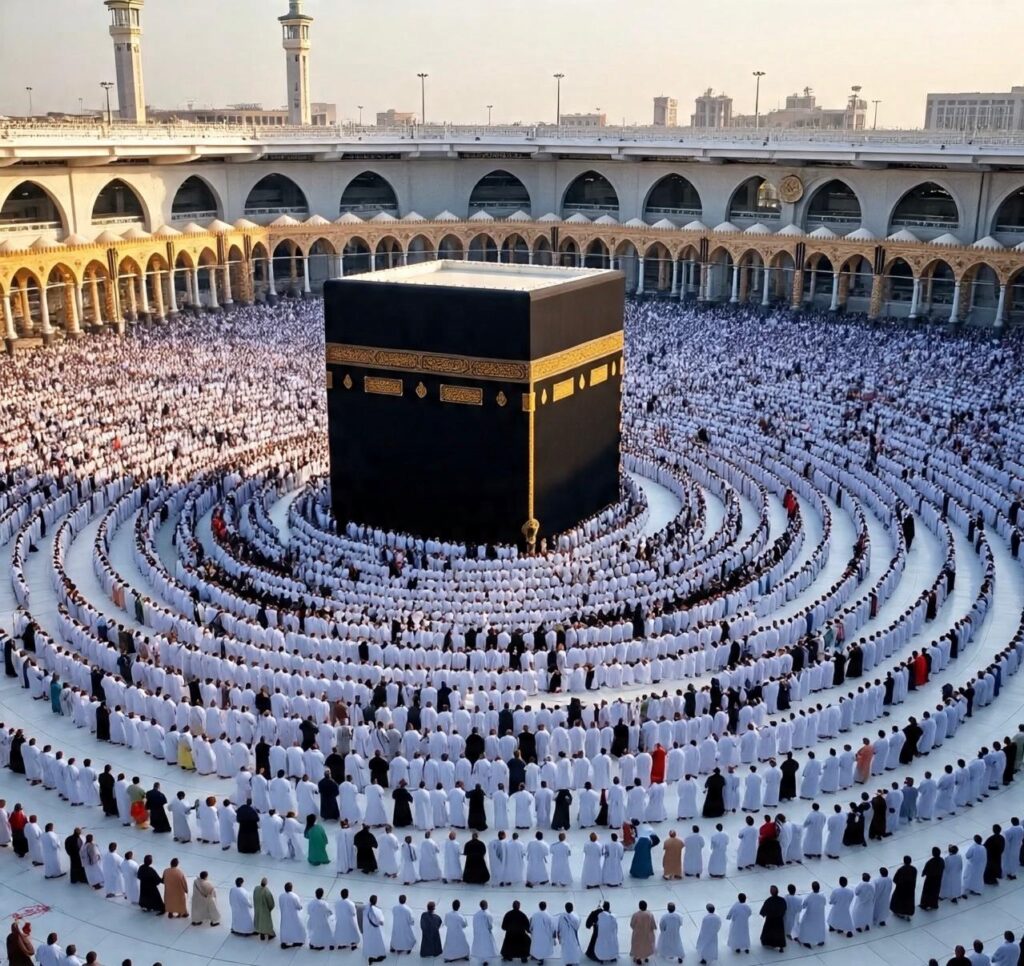
The 5 Pillars of Islam: Not a Checklist — A Complete System for Your Entire Life
Most of us learned the 5 Pillars of Islam as five words to memorize for an Islamic Studies exam. Shahada. Salah. Zakat. Sawm. Hajj. Then the exam ended — and the understanding stopped there.
That is the real problem. Not that young Muslims don’t know the names of the Pillars. It’s that they’ve never been shown what those Pillars are actually for. Why five? Why these five? And what does each one do to a human being when it’s applied with genuine understanding?
This post answers those questions directly — with the Quranic verses, the Hadith, and real examples of what each Pillar looks like when a student or young adult in 2026 actually lives it.
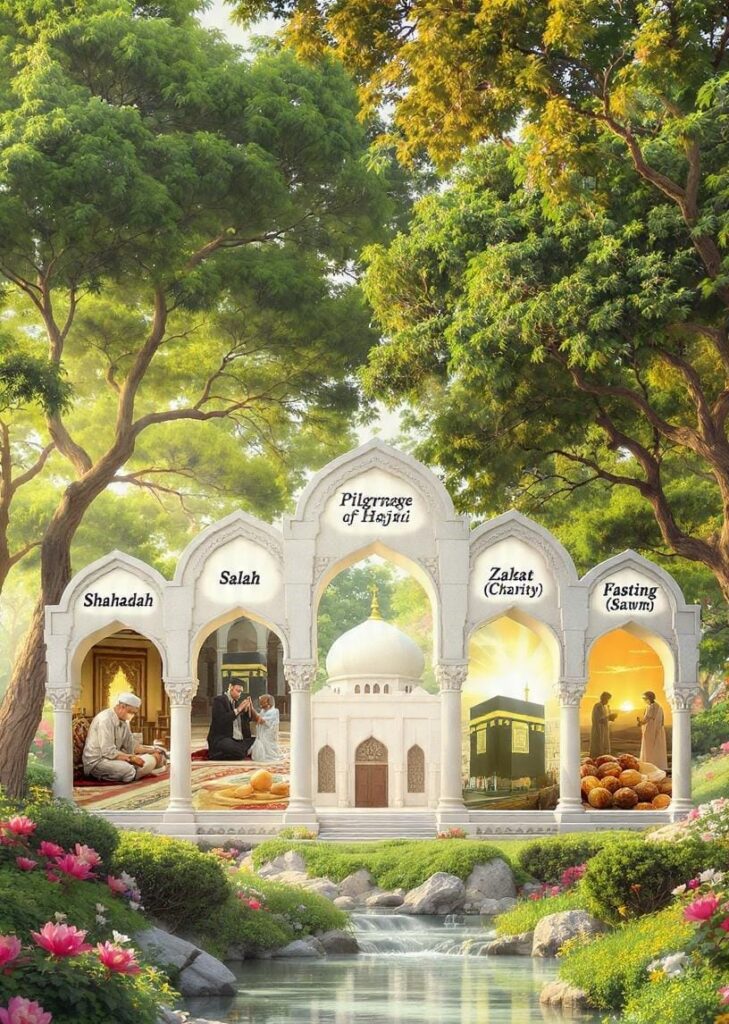
What are the 5 Pillars of Islam? The 5 Pillars of Islam are the five foundational acts of worship that every Muslim is obligated to observe: the Shahada (declaration of faith), Salah (five daily prayers), Zakat (obligatory annual charity), Sawm (fasting in Ramadan), and Hajj (pilgrimage to Makkah once in a lifetime for those able). Together they form the complete structural foundation of Islamic practice and identity.
The Hadith That Names All Five
The Prophet ﷺ used the word buniya — built upon. Architecture language. Not “Islam recommends five things” or “Islam encourages five habits.” Built upon. These are load-bearing walls. A structure missing one becomes unstable — not eventually, but immediately. The wobble starts the moment a pillar is removed.
What Each Pillar Actually Does to You
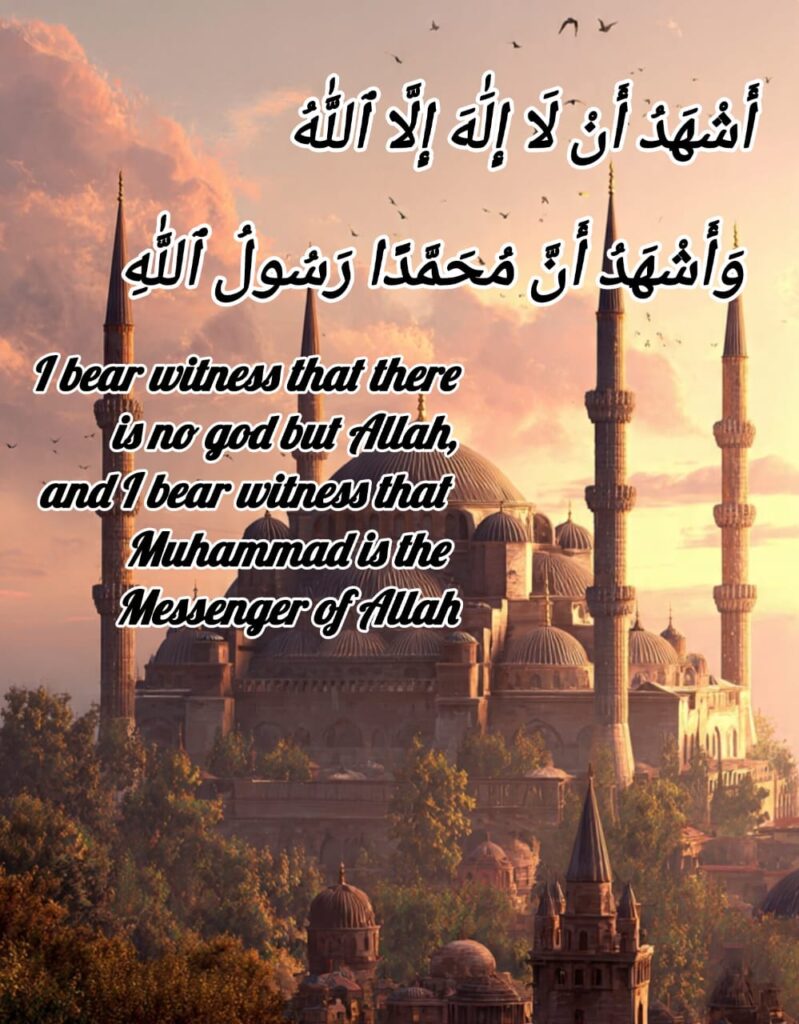
The Shahada is not a one-time entrance ticket. It is the foundational declaration that you return to, renew, and deepen for the rest of your life. It has two halves — and both are essential.
The first half — Lā ilāha illallāh — is a demolition clause before it is a construction clause. It tears down every false object of ultimate devotion before it installs the correct one. Money, approval, status, the fear of what people think — the Shahada names all of them as gods that have no real authority over you. Then it replaces them: illallāh — except Allah.
The second half — Muḥammadun rasūlullāh — is not an addition to the first. It is the implementation guide. Belief without a practical model is abstract. The Prophet ﷺ is the living translation of what lā ilāha illallāh looks like in a real human life — in how he spoke, worked, resolved conflict, dealt with loss, and treated people who disagreed with him.
Allah does not simply ask for belief in the Quran — He commands knowledge: “So know that there is no god worthy of worship except Allah.” (Quran 47:19). The command is fa’lam — know. Your Shahada is only as strong as the depth of your understanding of what you are declaring.
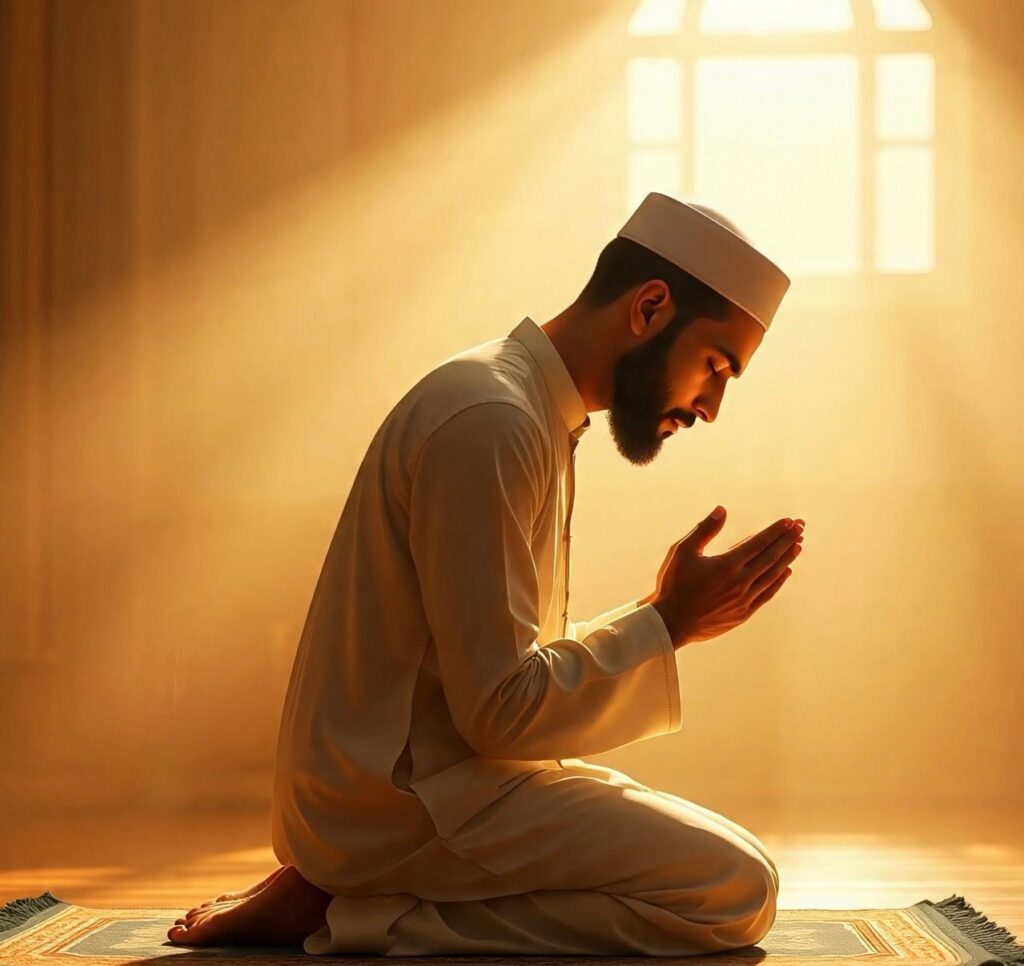
Five times a day. Fixed times. Not when you feel like it, not when work quiets down, not after the Netflix episode ends. The Quran uses the word mawqūtā — appointed times, specified, non-negotiable. This is deliberate. Salah is designed to interrupt the momentum of dunya before the dunya momentum becomes you.
The Prophet ﷺ gave one of the most vivid analogies in all of Hadith. He asked his companions: if a man bathed in a river outside his door five times a day, would any dirt remain on him? They said no. He said: that is what the five prayers do to sins. (Sahih Bukhari, No. 528 | Sahih Muslim, No. 667). Five resets. Every single day.
For students and young adults, this means Salah during exam week is not a sacrifice — it is the most protective habit you can maintain. The mental clarity that makes three hours of study effective costs you nothing compared to the 10 minutes of Dhuhr you’re tempted to skip. Guard the prayer and it guards you back.
The Prophet ﷺ also turned to Salah specifically in moments of difficulty and stress — not after the storm passed, but inside it. (Abu Dawud, No. 1319 — narrated by Hudhayfah RA). That is the model. Not prayer as celebration. Prayer as stabiliser.
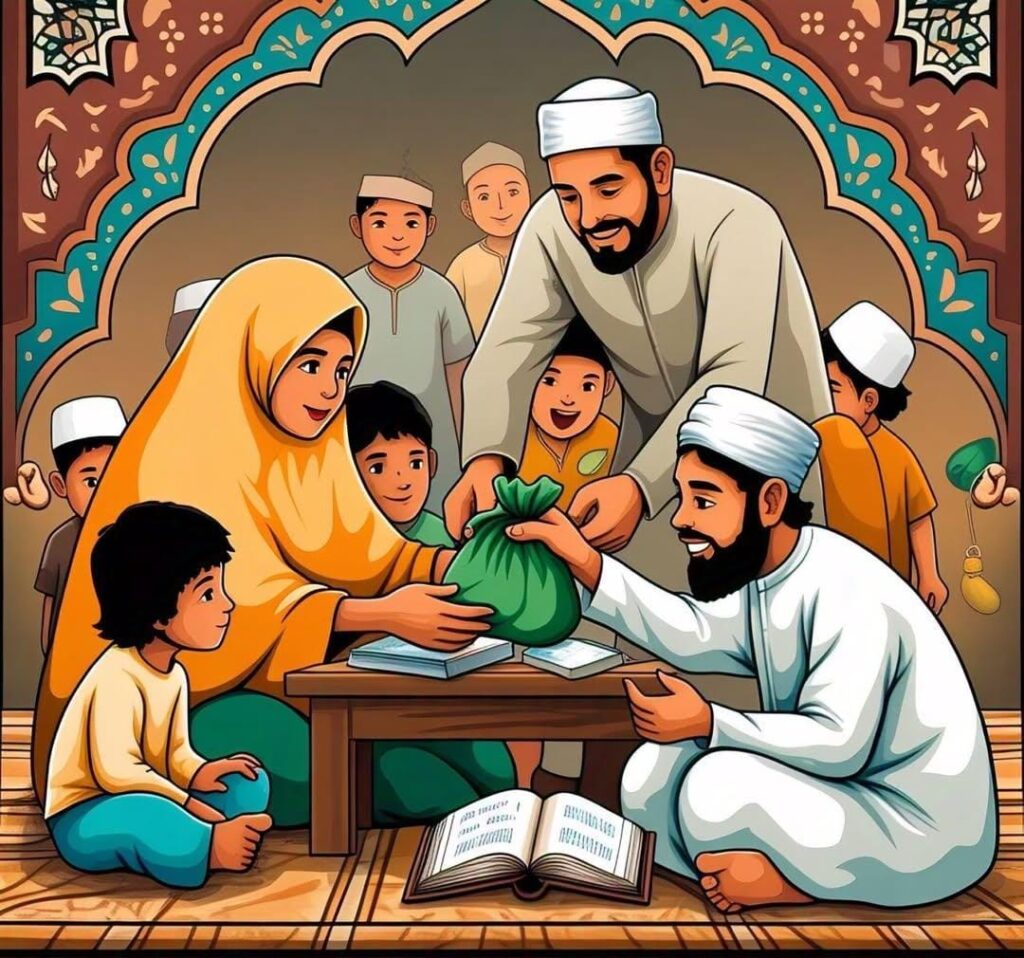
Two words in this verse do a lot of work: tuṭahhiruhum — purify them — and tuzakkīhim — cause them growth. Zakat is not merely a transfer of funds. It is a purification mechanism for the giver, not just a relief mechanism for the recipient. The one who gives is the one being cleansed.
Zakat is 2.5% of eligible savings that have been held above the nisab threshold for a full lunar year, given annually to one of the eight categories of recipients named in the Quran. (Quran 9:60). The calculation is precise. But the effect is spiritual — it breaks the psychological ownership that wealth quietly builds over a person’s priorities, decisions, and sense of security.
The Quran is unambiguous about what happens when Zakat is withheld. Those who hoard their wealth are warned that the very thing they clung to will become a source of torment. (Quran 9:34-35). This is not a threat for its own sake — it is a description of what happens to a heart that makes wealth its primary concern. Money was designed to be a tool. Zakat is the system that keeps it in that position.
As a student, you may not yet be obligated to pay Zakat — the nisab threshold may not apply to your savings. But learning Zakat’s purpose now, before wealth arrives, is how you avoid the trap that catches people who only confront their relationship with money after they’ve already lost perspective on it.
The Quran names the purpose of Sawm in plain language: taqwa. Not weight loss. Not detox. Not a productivity experiment. Taqwa — a heightened, active consciousness of Allah that changes how you behave when no one is watching, when the camera is off, when the consequences are invisible. That is the goal. The fast is the training method.
Sawm in Ramadan is broader than skipping meals. The Prophet ﷺ issued a direct warning: “Whoever does not give up lying speech and acting on those lies, Allah has no need of his giving up his food and drink.” (Sahih Bukhari, No. 1903). This means the fast extends to the tongue, the eyes, the hands, the content you consume, the conversations you allow, and the way you speak to the people around you. Ramadan is a full audit — not a dietary one.
Taqwa is a muscle. It does not develop through reading about it. Ramadan is the 30-day training camp where that muscle is pushed past its comfort zone and forced to grow. The discipline of holding hunger through the afternoon is the same discipline that stops you from responding to a provocation with something you’ll regret. Both require the same skill: overriding the nafs when it demands immediate relief.
The Prophet ﷺ recommended voluntary fasts outside Ramadan — particularly six days of Shawwal — specifically to maintain what Ramadan builds. (Sahih Muslim, No. 1164). Ramadan sets the standard. The rest of the year is meant to operate closer to it.
Hajj is obligatory once in a lifetime — and only for those who are physically and financially capable of making the journey. The condition of ability is built into the obligation itself. But when you are able, Allah calls it a duty owed — not a recommendation, not a goal to consider, but a right that Allah has over every Muslim who meets the conditions.
The Prophet ﷺ described a Hajj performed correctly — with sincerity, avoiding wrongdoing and disputes — as resulting in a person returning in the same state as the day they were born. (Sahih Bukhari, No. 1521 | Sahih Muslim, No. 1350 — narrated by Abu Hurairah RA). A complete reset. That is not an exaggeration of reward. That is what genuine repentance combined with the depth of that journey produces in a person.
What Hajj does that no other Pillar does is remove every marker of worldly identity in a single act. You wear two plain white sheets — identical to the person standing next to you, whether they are a billionaire or a student with a student loan. You stand on the plain of Arafat, surrounded by millions doing the same thing, and the only thing that separates any of you before Allah is taqwa. (Quran 49:13). The CEO and the intern are wearing the same thing. That image does not leave a person when they come home.
For young people who are years away from Hajj financially, the value of understanding it now is in the intention. Setting Hajj as a financial goal early — even as a student — keeps the fifth Pillar in your frame of reference instead of permanently deferred. Scholars note that a sincere intention to perform an obligation carries its own weight before Allah.
Why All Five Work Together — and What Breaks When One Is Missing
Each Pillar was designed to address a specific vulnerability in the human being:
Remove one and the gap shows everywhere else. A person who maintains Salah but never disciplines their desires struggles the moment Ramadan demands real sacrifice. A person who fasts faithfully but ignores Zakat has internal discipline without social responsibility. A person with Shahada on their lips but no practice in their days has a declaration without a structure to hold it up.
Islam did not design these as optional personal choices. They are interdependent. They are designed to run together.
04 — Real-Life ApplicationWhat the 5 Pillars Look Like When You Actually Live Them
Finals. Your schedule has collapsed. You’re surviving on three hours of sleep and the quiet panic that comes with knowing everything is due at once. The first thing most students sacrifice is Salah — “I’ll combine them later,” “I’ll make them up after submission.”
Here is what is actually happening: you are removing the one daily practice designed to reset your cognitive and emotional state five times a day — during the most demanding week of your academic year. Salah is not competing with your study time. It is protecting the quality of it. Ten minutes of Dhuhr costs you nothing compared to the clarity it returns.
The Prophet ﷺ turned to prayer when pressure arrived — not when it lifted. That is the Sunnah model. Salah inside the storm, not after it.
You land your first real income — a part-time job, a freelance project, a scholarship stipend. The immediate cultural instinct in 2026 is: save it all, invest it, build wealth, achieve financial independence. None of that is wrong. But the question is what relationship you are building with money while you do it.
Understanding Zakat before you are obligated to pay it is what shapes that relationship. The person who builds wealth already knowing that 2.5% belongs to others builds a fundamentally different internal relationship with money than the person who only learns generosity after accumulation has already done its work on their character.
Most students approach Ramadan as a month of reduced eating and slightly more Quran. The Prophet ﷺ described a person who maintains harmful speech while fasting as someone whose fast carries no value. (Sahih Bukhari, No. 1903). Ramadan is a 30-day character audit.
What are you watching? What are you saying about people who are not there? What does your Suhoor hour before Fajr actually look like? Ramadan is the one month where all five Pillars — Shahada renewed daily, Salah protected fiercely, Zakat often given, Sawm observed fully — run simultaneously at full intensity. It is designed to rebuild you. Let it.
You are 20 years old. Hajj feels like something for later — after the degree, after the job, after the savings are sorted. That thinking is understandable. But scholars note that holding a sincere intention to perform an obligatory act carries real weight before Allah, even when the conditions for it are not yet met.
Put Hajj in your financial plan now. Not as a vague “someday” — as an actual goal with a number attached. The fifth Pillar is not optional for those who become able. The earlier it enters your planning, the more it shapes the values you build your financial decisions around on the way there.
5 Pillars of Islam: The Questions People Actually Search
Start With the Foundation
Iqrailmify offers structured Islamic education for students and young adults — Aqeedah, Quran, Fiqh, and Seerah. Built for real schedules. Designed for real understanding.
Explore Iqrailmify →