Complete Guide to Salah (Namaz) Step-by-Step Prayer Guide for Beginners
Salah, also called Namaz, is one of the most important acts of worship in Islam. It connects a believer directly with Allah and brings peace, discipline, and guidance into daily life.
This page is a complete and easy guide to Salah. It is made for everyone
Easy Steps of Salah
Salah is one of the five pillars of Islam. It is an obligation for every adult Muslim. Through Salah, we remember Allah, thank Him, and ask for His help and guidance in our daily life.
Praying regularly teaches discipline, patience, and humility. Salah is not only physical movement, it is also a spiritual connection between the servant and Allah.
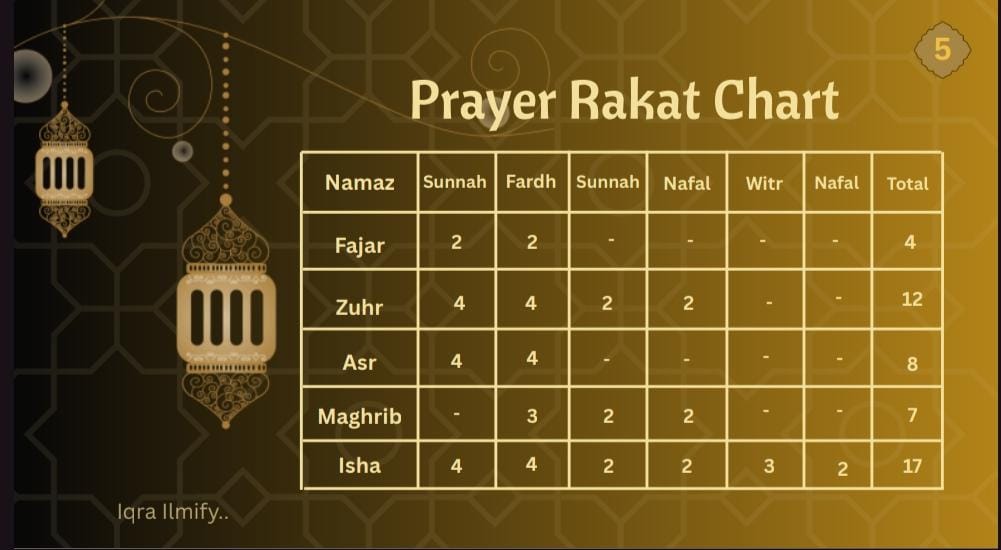
The Five Daily Prayers in Islam
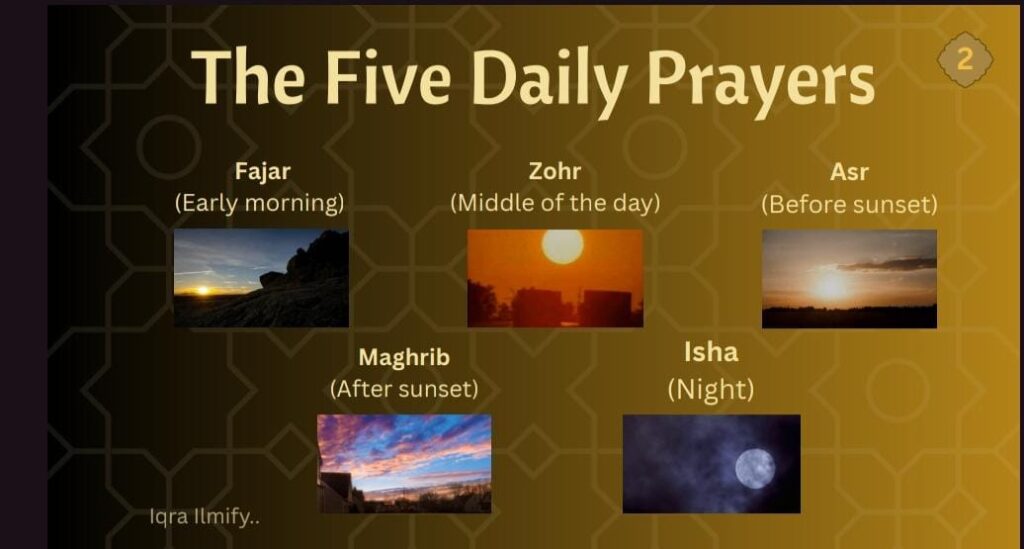
Islam has five daily prayers. Each prayer has a fixed time and purpose.
Fajr
Prayed early in the morning before sunrise.
Zuhr
Prayed in the middle of the day after the sun passes its peak.
Asr
Prayed in the late afternoon before sunset.
Maghrib
Prayed just after sunset.
Isha
Prayed at night after darkness begins.
Praying on time is very important in Islam and shows obedience to Allah.
Wudu – Purification Before Salah
Before praying Salah, a Muslim must be clean. This cleanliness is done through Wudu.
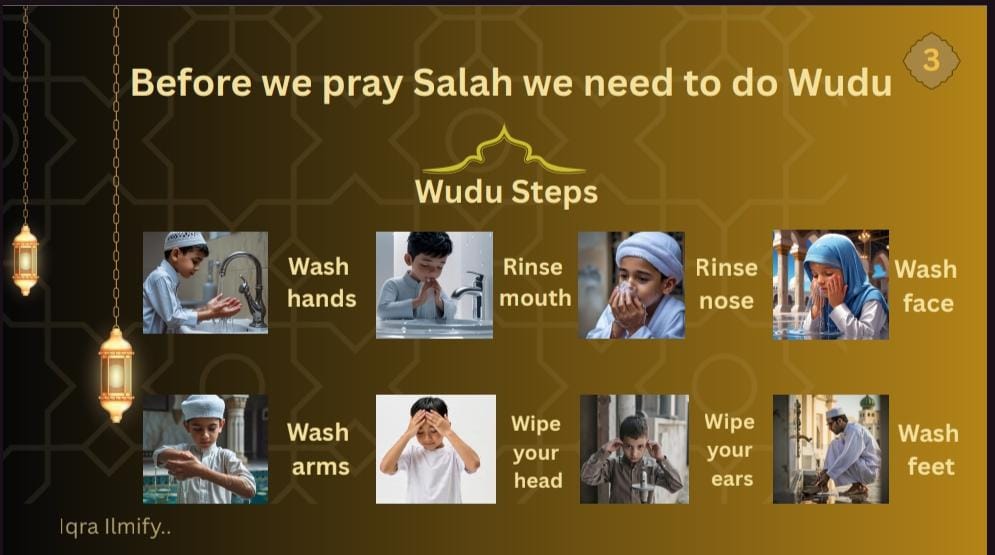
Steps of Wudu
First, wash both hands up to the wrists.
Then rinse the mouth properly.
After that, rinse the nose gently.
Wash the entire face from forehead to chin.
Wash both arms up to the elbows.
Wipe the head with wet hands.
Wipe the ears inside and outside.
Finally, wash both feet up to the ankles.
Wudu cleans both the body and the heart and prepares a person for prayer.
Things to Make Sure Before Salah
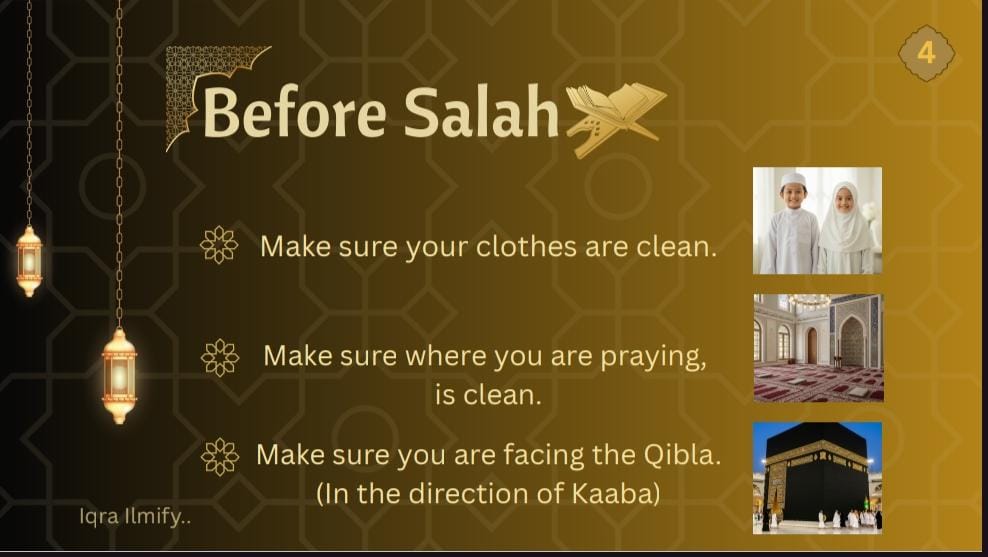
Before starting Salah, make sure of the following:
Your clothes should be clean.
The place where you pray should be clean.
You should be facing the Qibla, which is the direction of the Kaaba in Makkah.
These conditions are necessary for Salah to be valid.
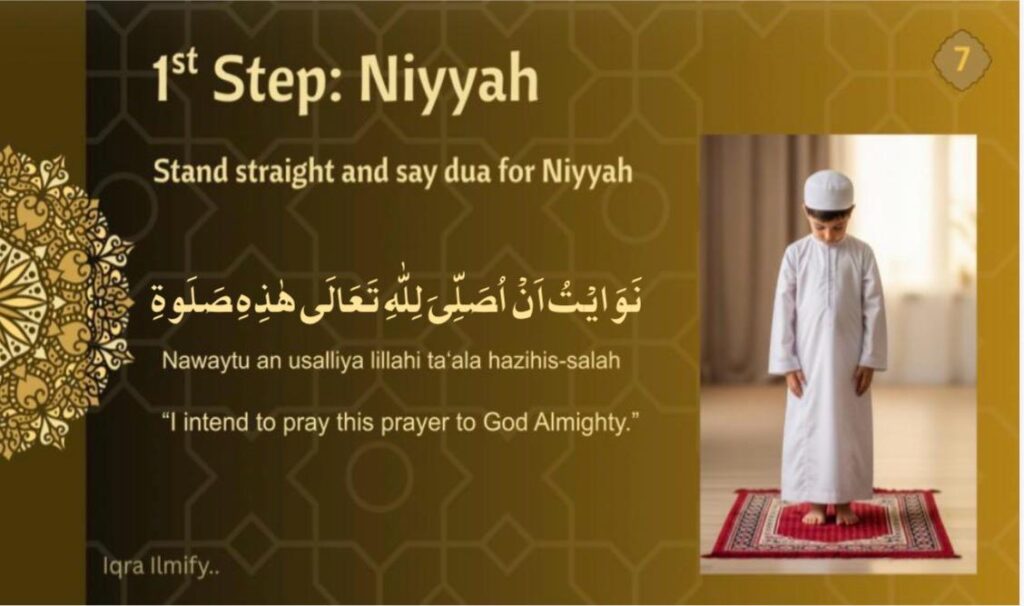
Step 1 – Niyyah (Intention)
Niyyah means intention. It is made in the heart before starting Salah. There is no need to say it loudly.
Example intention in English:
I intend to pray two Rakats of Fajr Salah for Allah.
Allah looks at sincerity, not words.
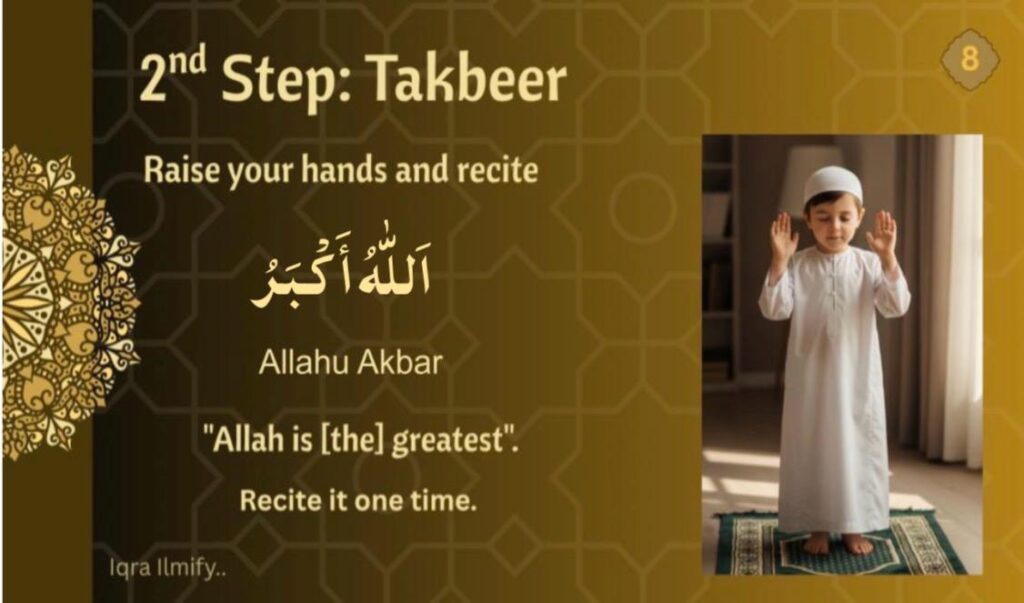
Takbir (Starting the Salah)
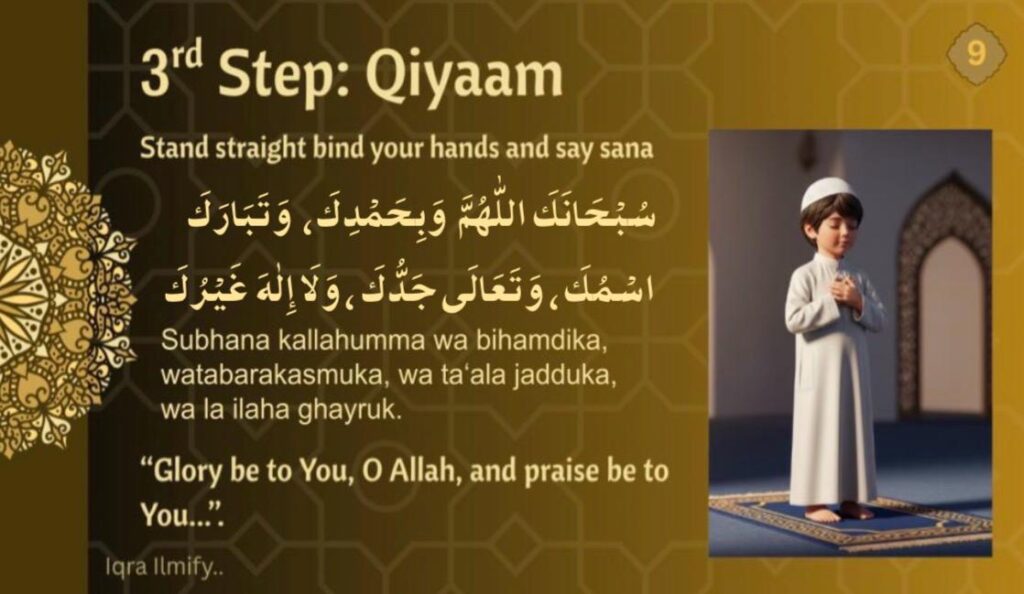
To begin Salah, you stand straight facing the Qibla and make intention in your heart for the prayer you are about to pray. Then you say Allahu Akbar. This is called the opening Takbir. Men usually raise both hands up to the level of their ears, while women usually raise their hands up to the level of the shoulders or chest in a modest way. The words Allahu Akbar mean Allah is the Greatest, and by saying this, you enter into Salah and leave all other actions behind.
Placing the Hands After Takbir
After saying Allahu Akbar, you place your hands while standing. Men commonly place the right hand over the left hand on the upper stomach or chest area. Women commonly place the right hand over the left hand higher on the chest area in a modest manner.The main purpose is to stand respectfully and calmly before Allah. Once hands are placed, you keep your eyes lowered and focus on prayer.
Beginning the Recitation (Standing Position – Qiyam)
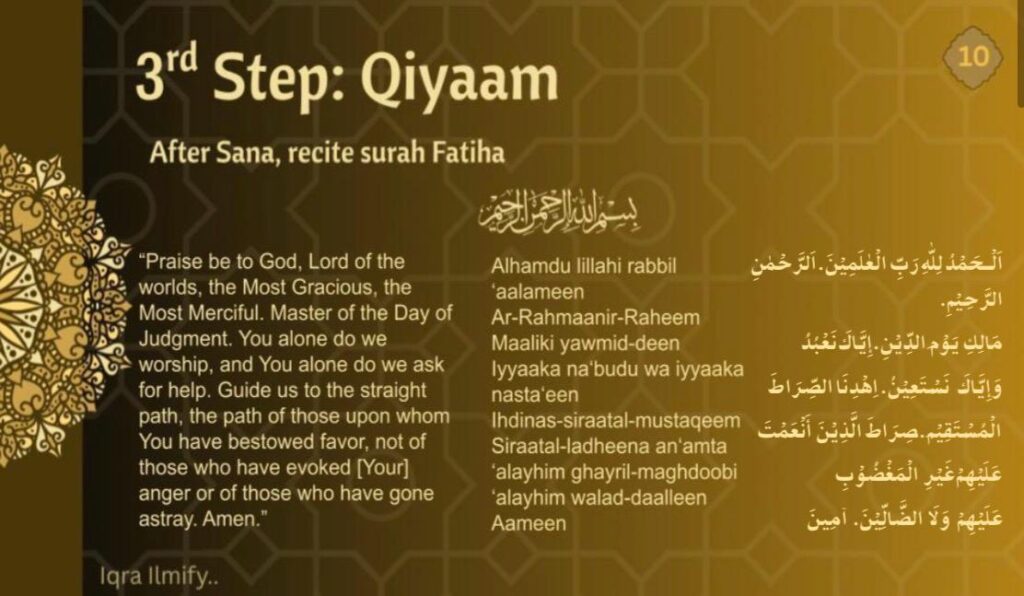
While standing with hands placed, you begin recitation. In the first rakah, many Muslims recite the opening supplication called Sana. After that, you quietly say Aoodhu billahi min ash shaytan ir rajim and Bismillah ir Rahman ir Rahim. Then you recite Surah Al Fatiha slowly and clearly. After finishing Surah Al Fatiha, you say Ameen quietly if praying alone or behind an imam.
Reciting Another Surah After Al Fatiha
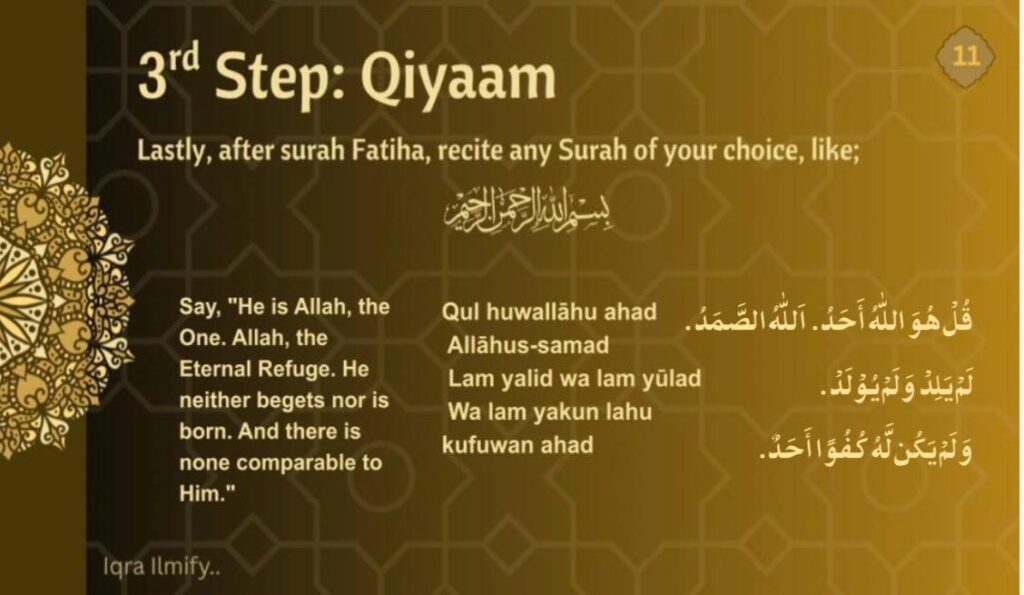
After Surah Al Fatiha in the first and second rakah, you recite another short surah or a few verses from the Quran, such as Surah Al Ikhlas. This recitation is only done in the standing position. In the third and fourth rakah of some prayers, only Surah Al Fatiha is recited without an additional surah.
Going Into Ruku (Bowing)
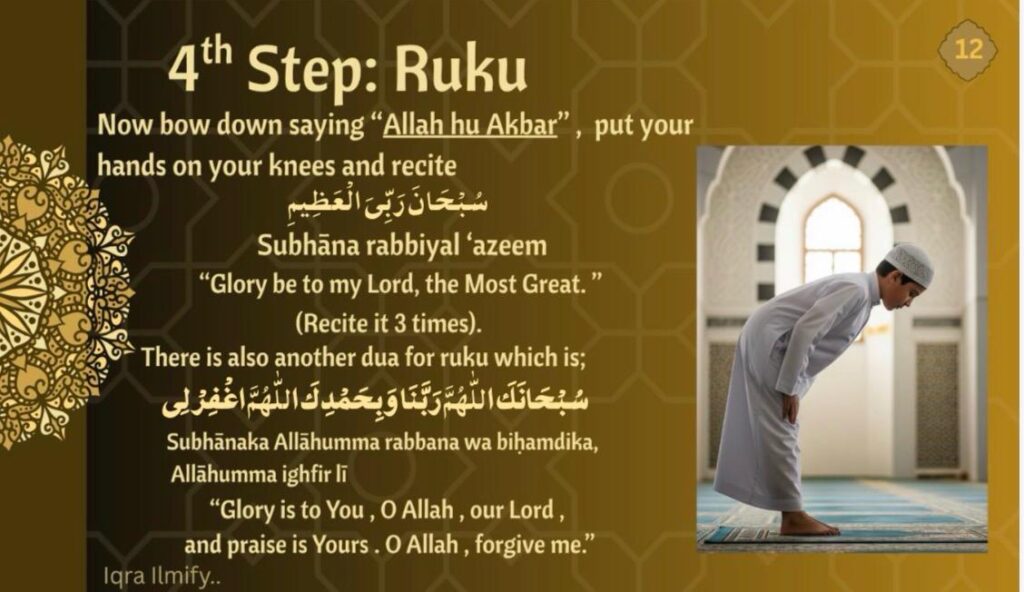
After completing the recitation, you say Allahu Akbar and move into ruku. In ruku, you bend forward and place your hands on your knees. Men usually keep their backs straight and elbows away from the body. Women usually keep elbows closer to the body in a modest posture. In ruku, you say Subhana Rabbiyal Azeem at least three times, which means Glory be to my Lord, the Most Great.
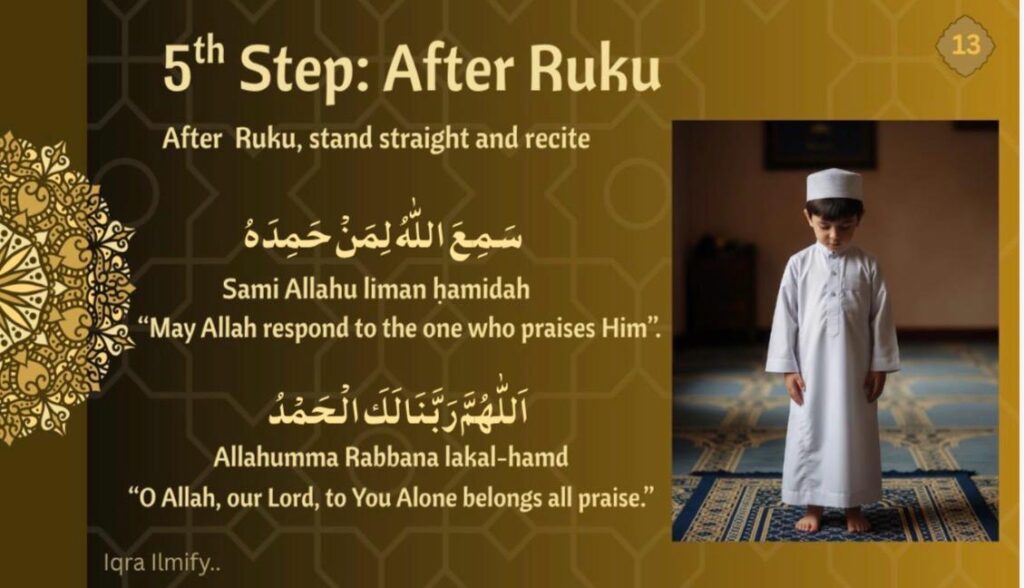
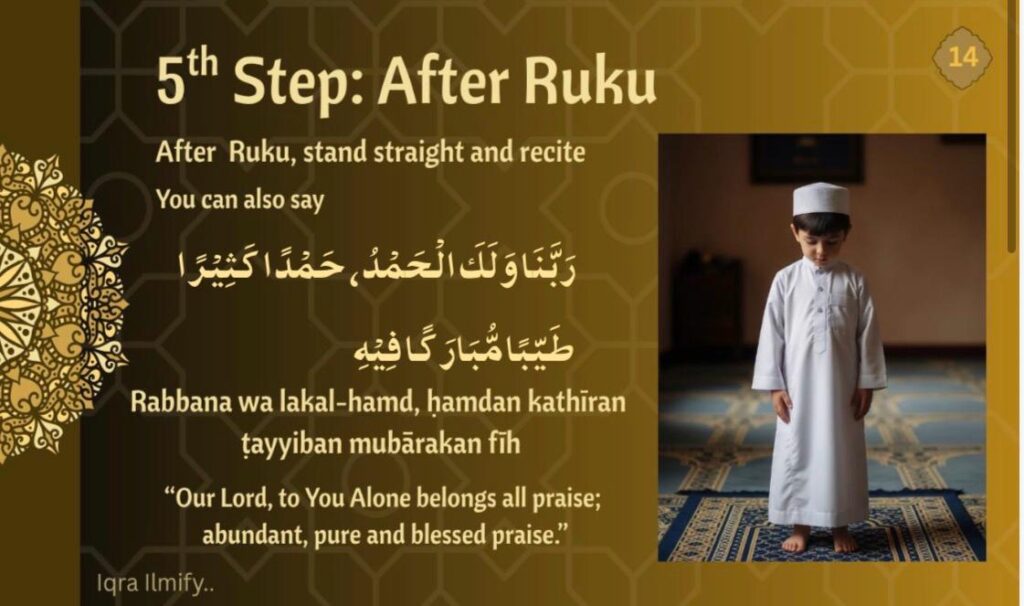
Standing Straight After Ruku
After ruku, you rise back to a standing position. While standing up, if you are praying alone or leading prayer, you say Sami Allahu liman hamidah. When you are fully standing straight, you say Rabbana lakal hamd. This standing after ruku is an important step and should not be rushed. You pause briefly before moving to prostration.
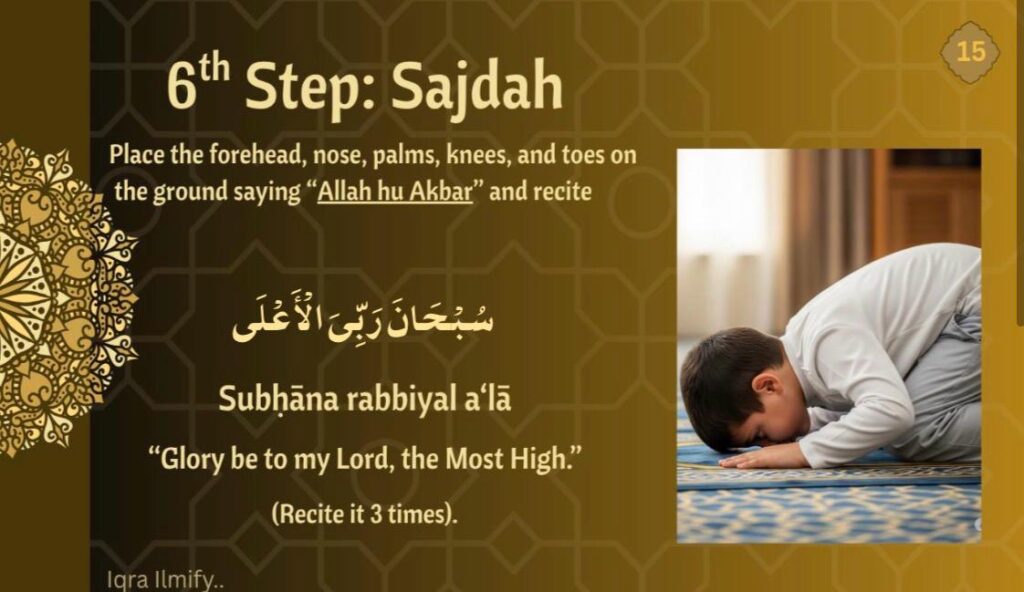
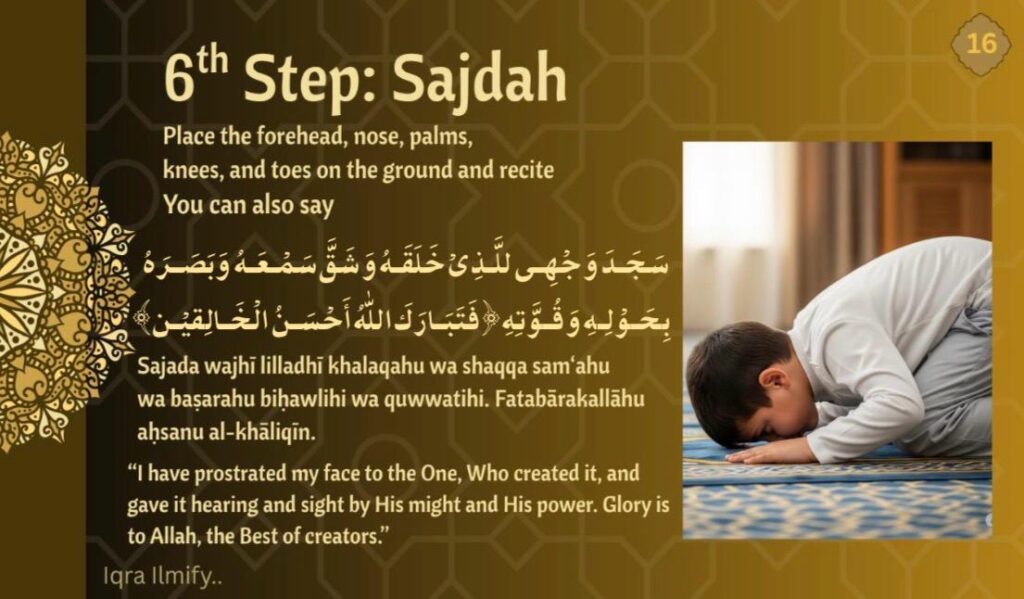
First Prostration (First Sujood)
After standing straight, you say Allahu Akbar and go into sujood. In sujood, you place your forehead and nose on the ground, along with both hands, both knees, and the toes of both feet. Men usually keep their arms slightly lifted off the ground. Women usually keep their arms closer to the body. In sujood, you say Subhana Rabbiyal Aala at least three times. This position shows complete humility before Allah.
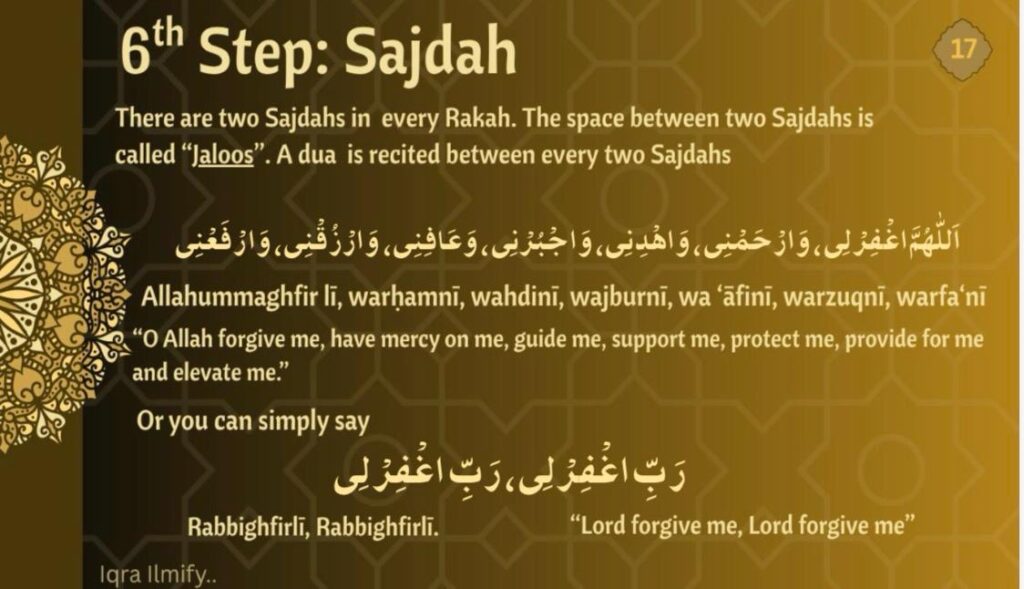
Sitting Between the Two Prostrations
After the first sujood, you say Allahu Akbar and sit up briefly. This sitting is done calmly. You ask Allah for forgiveness and mercy, commonly by saying Rabbighfir li. This short sitting gives balance to the prayer and helps beginners and children understand the flow of Salah clearly.
Second Prostration (Second Sujood)
After sitting between the prostrations, you say Allahu Akbar and go into the second sujood. You perform the prostration in the same way as the first one. Again, you say Subhana Rabbiyal Aala at least three times. After completing this second sujood, you prepare to move to the next step of Salah.
Standing for the Second Rakah
After completing the second prostration of the first rakah, you say Allahu Akbar and stand up for the second rakah. You place your hands again and begin recitation with Surah Al Fatiha, followed by another short surah. The actions of ruku, standing after ruku, and prostrations are repeated in the same order.
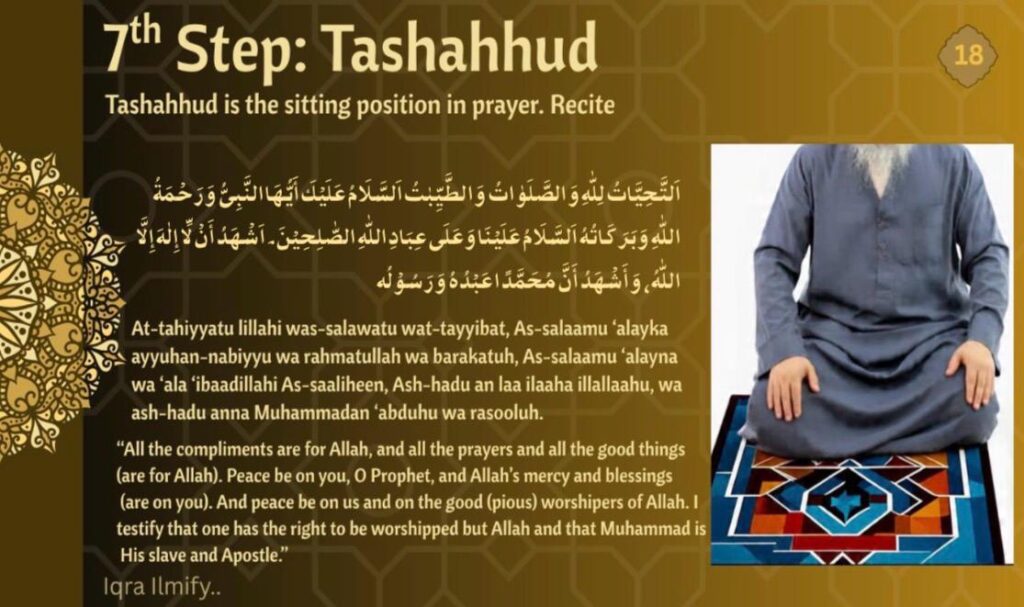
Sitting After the Second Rakah
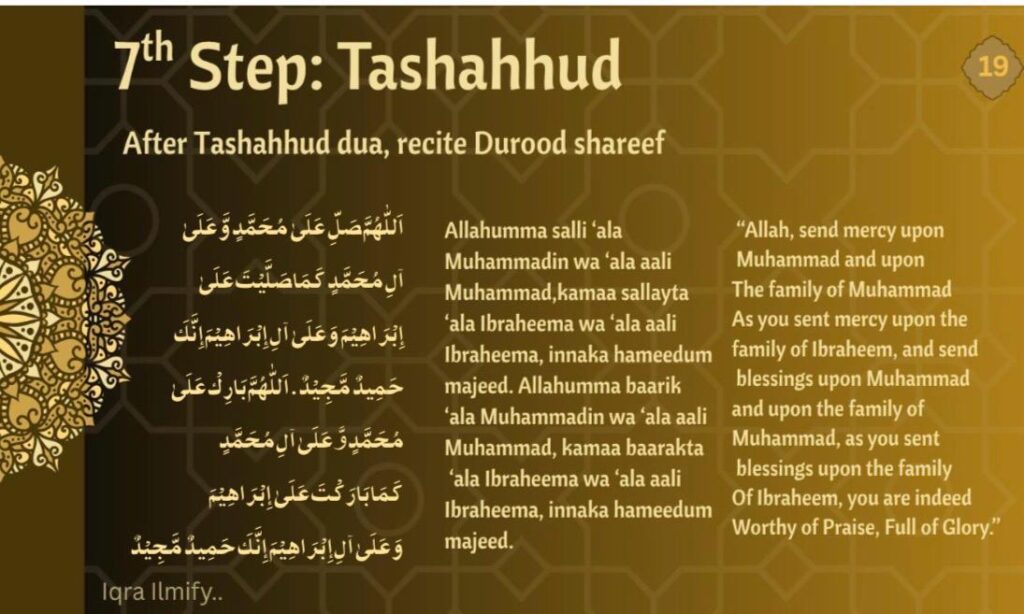
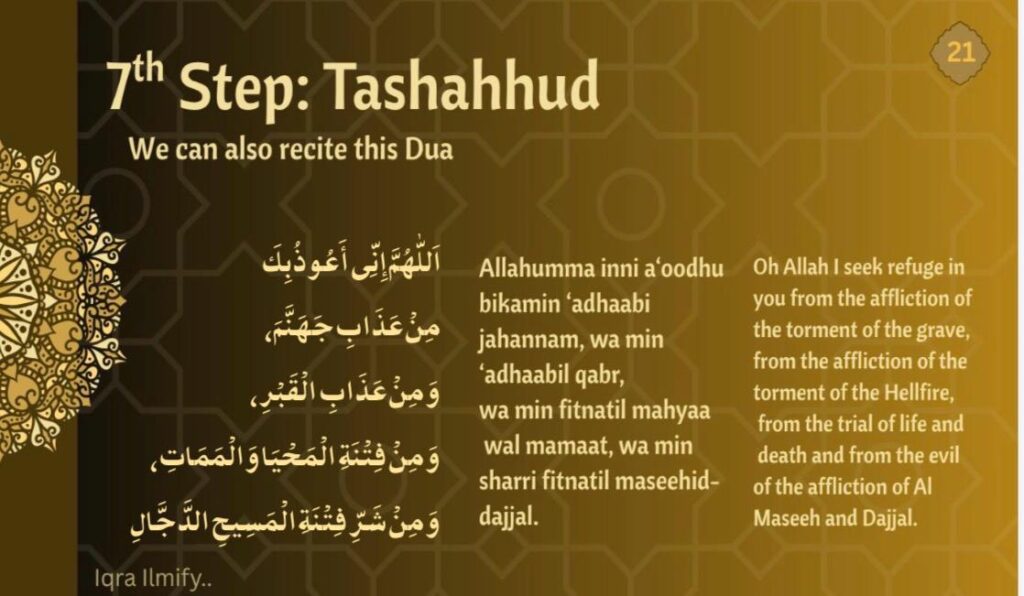
After completing the second prostration of the second rakah, you sit down for tashahhud. In this sitting, you recite At Tahiyyatu and send blessings upon Prophet Muhammad ﷺ. If the prayer ends at two rakahs, you complete it with salam. If the prayer has more rakahs, you stand again to continue.
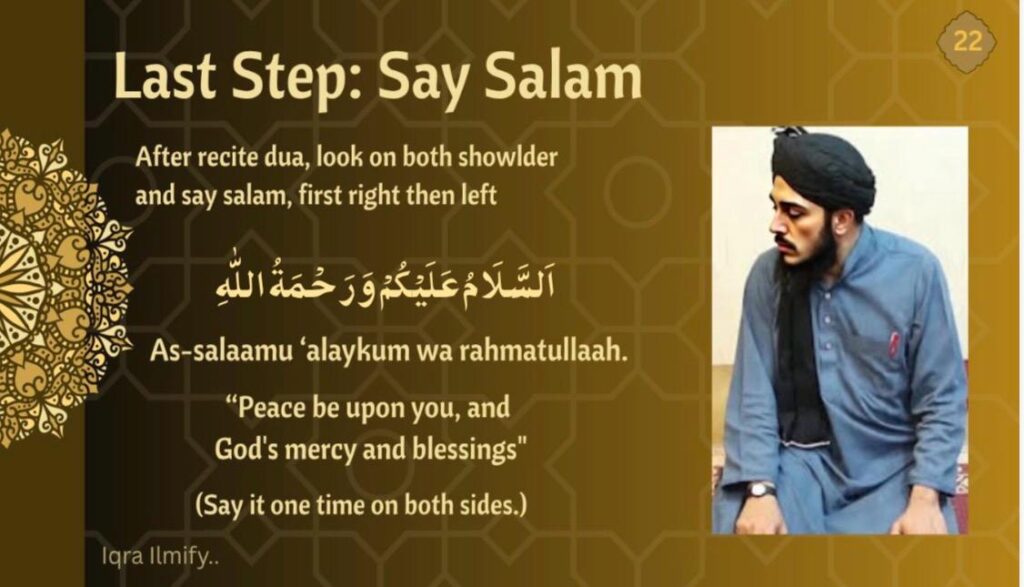
Salam – Ending the Salah
After completing the final sitting in Salah, we end the prayer by saying Salam. We turn our head to the right and say Assalamu Alaikum wa Rahmatullah, then turn our head to the left and say Assalamu Alaikum wa Rahmatullah again. This Salam means peace and mercy of Allah be upon you. By saying Salam, the Salah is completed, and we return from prayer to normal actions.
What to Do After Completing Salah
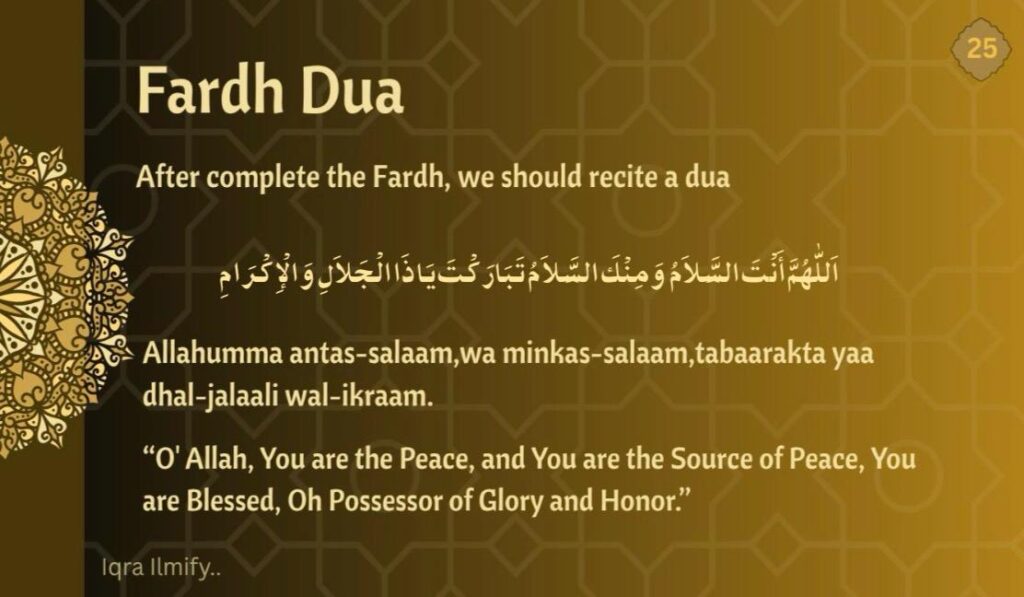
After Salam, it is recommended to remain seated for a short time. This is a peaceful moment to remember Allah and make dua. Although Salah is complete, this time after prayer is very special because duas made after Salah are highly encouraged in Islam.
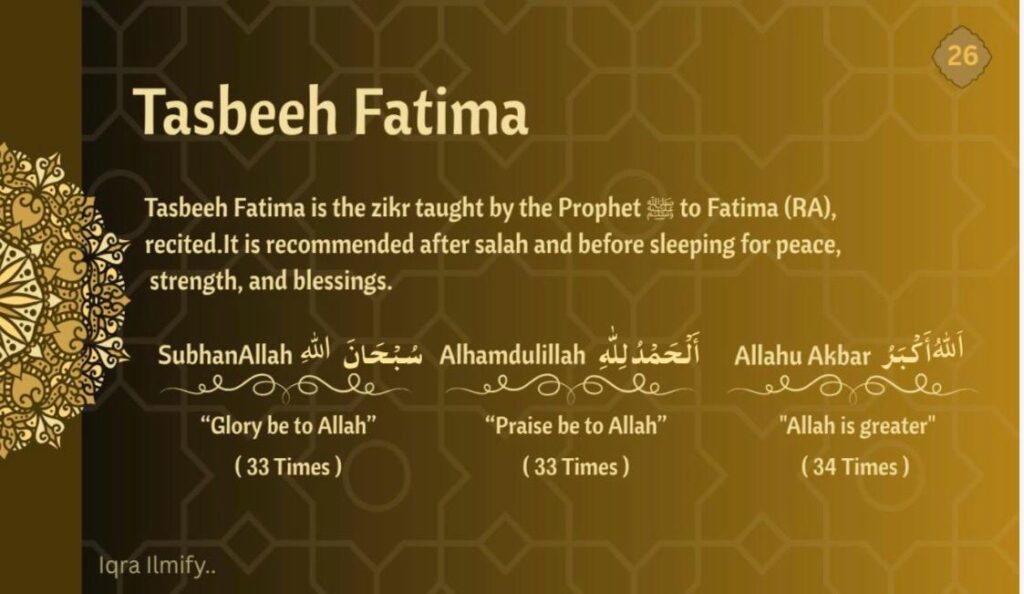
Tasbihat After Salah
After completing Salah, many Muslims recite Tasbihat to remember Allah. These are short phrases of remembrance. You say SubhanAllah thirty-three times, which means Allah is free from all imperfections. Then you say Alhamdulillah thirty-three times, which means all praise belongs to Allah. After that, you say Allahu Akbar thirty-four times, which means Allah is the Greatest.
These remembrances bring peace to the heart and increase reward.
Making Dua After Salah
After Tasbihat, you can raise your hands and make dua. Dua means asking Allah for help, forgiveness, and guidance. You can ask Allah in your own language. You can ask for your parents, family, children, health, success, and protection. Allah loves when His servants ask Him sincerely.
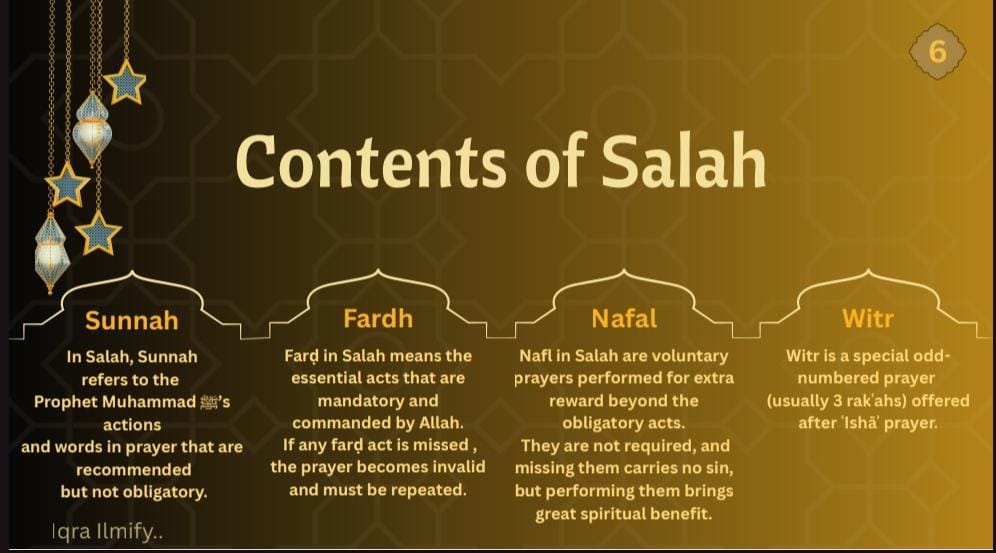
Importance of Witr Prayer
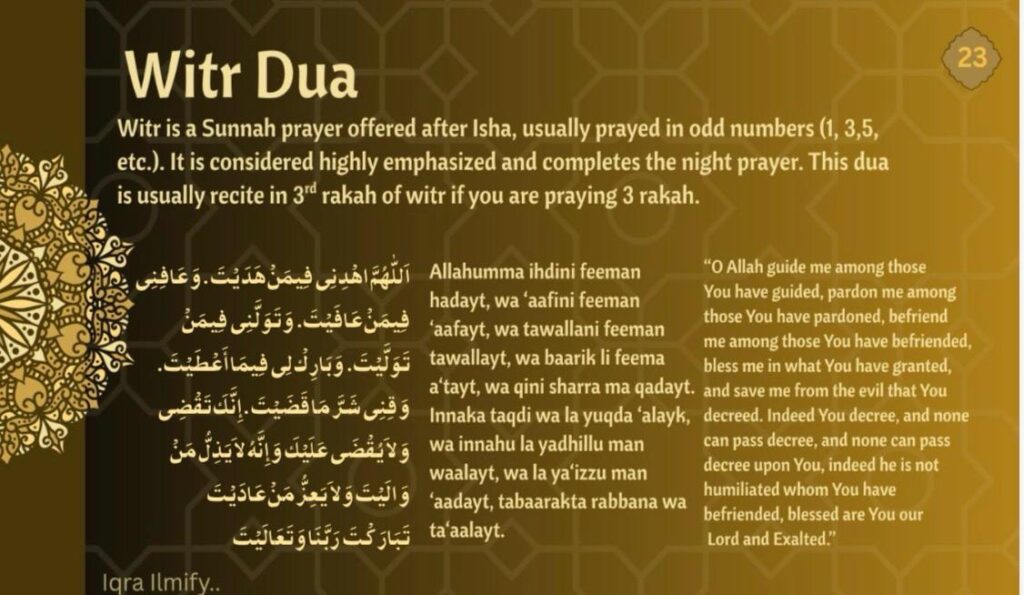
Witr prayer is offered after Isha Salah and is a very important prayer. It is usually prayed as three rakahs. Witr completes the night prayer and was regularly prayed by Prophet Muhammad ﷺ. Muslims should try not to miss Witr prayer, even when tired.
Dua-e-Witr (Supplication in Witr Prayer)
In the last rakah of Witr prayer, after recitation and before going into ruku or after ruku depending on practice, a special dua called Dua-e-Witr is recited. In this dua, we ask Allah for guidance, forgiveness, mercy, and protection from harm
The meaning of Dua-e-Witr is that we ask Allah to guide us among those He has guided, forgive us among those He has forgiven, protect us from evil, and bless us in what He has given us. This dua shows our complete trust in Allah.
Ending the Night With Remembrance of Allah
After Witr prayer and Dua-e-Witr, it is recommended to remember Allah quietly, make personal duas, and end the night with a peaceful heart. This helps strengthen faith and brings calmness before sleep.